
Office Furniture Installation Company: What Businesses Should Know Before Setup
Setting up an office involves more than delivering desks, chairs, cabinets, and workstations to a building. Furniture needs to be assembled correctly, positioned according to the floor plan, and checked for stability before employees begin using the space. Poor installation can create damaged furniture, blocked walkways, inefficient layouts, and unnecessary delays.
An office furniture installation company can handle the physical setup while businesses concentrate on preparing the workplace for daily operations. Understanding what these services involve helps office managers, facility teams, and business owners plan installations with fewer complications.
What Office Furniture Installation Involves
Office furniture installation covers the process of taking furniture from delivery to a usable workplace. Depending on the project, this can include unpacking products, assembling individual components, positioning furniture, connecting certain workstation elements, and removing packaging materials.
Installation requirements vary considerably between offices. A small workspace with individual desks may require basic assembly, while a larger corporate office can involve dozens or hundreds of interconnected workstations.
Installers may work with:
- Desks and executive tables
- Cubicles and modular workstations
- Conference room furniture
- Filing cabinets and storage units
- Reception desks
- Training room tables and chairs
- Breakroom furniture
- Shelving and office storage systems
A detailed floor plan is often useful before installation begins. It allows the installation team to understand where each item belongs and reduces unnecessary movement after furniture has been assembled.
See also: Smart Boat Maintenance Strategies for Reliable Performance and Long-Term Value
Why Proper Assembly Matters
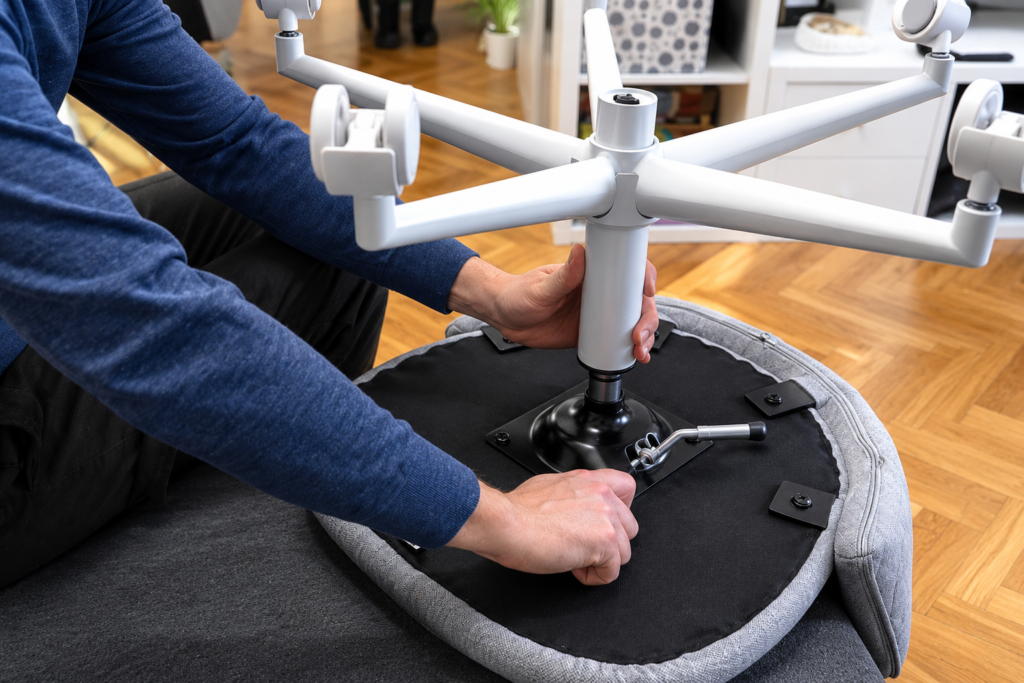
Furniture assembly is not simply a matter of connecting visible parts. Many commercial products contain brackets, fasteners, adjustable components, cable-management features, and leveling mechanisms that must be installed in the correct sequence.
Incorrect assembly can affect stability and usability. A desk that is not properly leveled may wobble, while a workstation assembled without the manufacturer’s recommended hardware may not perform as intended.
Office furniture assembly should therefore follow the manufacturer’s instructions and use appropriate tools. Installers also need to inspect components for missing or damaged parts before completing the setup.
This process becomes especially relevant when a business is installing a large quantity of identical furniture. A small assembly error repeated across several workstations can create a widespread problem that takes additional time to correct.
Planning a Business Furniture Installation
Planning starts before the furniture arrives. The business should confirm measurements, access points, elevator availability, delivery schedules, and the location where furniture will be installed.
A floor plan should identify desks, workstations, meeting areas, storage units, and other major pieces. Measurements are essential because furniture that fits comfortably on paper may create practical problems once doors, corridors, electrical outlets, and walkways are considered.
Business furniture installation may also require coordination with building management. Commercial properties can have rules regarding delivery hours, loading docks, elevators, floor protection, and disposal of packaging materials.
A clear installation schedule helps prevent conflicts with employees, contractors, IT teams, and other vendors working at the same site.
What Office Furniture Installation Services May Include
The scope of office furniture installation services depends on the project and the type of furniture being installed. Some companies provide assembly only, while others handle the complete installation process from unloading to final placement.
Typical services may include:
- Site preparation – The installation area is checked for obstacles and access restrictions.
- Unpacking – Furniture is removed from packaging and components are organized.
- Assembly – Individual pieces are built according to manufacturer specifications.
- Placement – Completed furniture is positioned according to the approved layout.
- Adjustment – Desks, chairs, cabinets, and workstations may be leveled or adjusted.
- Inspection – Installed furniture is checked for stability, alignment, and visible defects.
- Cleanup – Packaging materials and installation debris are removed from the work area.
Some projects also involve disassembly and relocation of existing furniture. This can be useful during office renovations, departmental moves, or workplace expansions.
Commercial Furniture Assembly Requires Planning
Large commercial projects can involve significantly more coordination than a residential furniture setup. A business may receive multiple shipments containing hundreds of individual components, sometimes from different manufacturers.
Commercial furniture assembly requires careful organization so that parts remain associated with the correct furniture systems. Installers may need to sort components by workstation, department, room, or installation phase.
A well-organized process can reduce misplaced hardware and unnecessary reassembly. It also makes it easier to identify missing components before the installation reaches a point where work must stop.
For large offices, businesses may benefit from establishing an installation sequence. For example, conference rooms can be completed first, followed by private offices, open work areas, and shared spaces.
Installation in Active Workplaces
Not every furniture project takes place in an empty building. Many companies renovate or expand while employees continue working.
In these situations, installation needs to account for noise, pedestrian traffic, employee safety, and access to operational areas. Work may need to occur outside normal business hours or in sections of the building that can be temporarily closed.
Installers should also protect floors, walls, doors, and existing furniture during movement and assembly. Large desks and workstation panels can be difficult to maneuver through narrow corridors, so access should be assessed before the installation date.
Communication between the installation team and office management can help prevent interruptions.
What to Check Before Hiring an Installation Provider
Businesses should review several practical details before selecting an installation provider. Experience with the specific type of furniture is one consideration. A team familiar with modular workstations may have different skills and equipment than one primarily handling simple desks and chairs.
Ask about:
- The types of furniture the company installs
- Experience with commercial projects
- Installation scheduling
- Handling of damaged or missing components
- Disassembly and relocation services
- Packaging removal
- Floor and property protection
- Coordination with building management
- Insurance and relevant business credentials
It is also useful to clarify the expected scope of work in writing. A quote should make clear whether unloading, assembly, placement, cleanup, and removal of packaging are included.
Preparing the Office Before Installation Day
Good preparation can make installation more efficient. Clear the installation areas of unnecessary equipment, personal belongings, and temporary storage. Confirm that installers can access loading areas, elevators, stairways, and the rooms where furniture will be placed.
The final floor plan should be available to the installation team. If there have been changes since the furniture was ordered, communicate them before work begins.
Electrical and technology requirements deserve separate attention. Furniture installation does not automatically mean that electrical, networking, or audiovisual work is included. Those responsibilities should be assigned separately when needed.
Commercial Furniture Installation and Workplace Layout
Furniture placement affects how people move through an office and use shared spaces. A poorly positioned workstation can restrict a walkway, interfere with cabinet doors, or make access to power outlets difficult.
Commercial furniture installation should follow the approved layout while allowing installers to identify practical issues that may not have been obvious during planning.
Clear pathways, usable storage, accessible meeting spaces, and sensible spacing between workstations all contribute to a functional workplace. The installation stage provides an opportunity to verify that the planned arrangement works physically within the available space.
Choosing the Right Installation Approach
The right installation approach depends on the size of the office, furniture type, building conditions, schedule, and available internal staff.
A small business may handle basic furniture assembly internally. Larger projects can require dedicated installers because of the quantity, weight, complexity, and coordination involved.
An office furniture installation company can provide a structured process for larger workplace projects, particularly when multiple rooms or interconnected furniture systems are involved. Before work begins, businesses should establish the scope, schedule, floor plan, responsibilities, and site requirements.
Careful planning does not eliminate every installation challenge, but it can reduce avoidable delays and help ensure that furniture arrives at its intended location ready for everyday use.