How Can a Seed Drying Tray Help Protect Seed Quality During Drying?
Seed drying is a critical stage in seed processing and storage because excessive moisture can affect seed stability, encourage deterioration, and reduce the ability to maintain seed quality over time. However, moisture removal must be carefully controlled. Seeds can be sensitive to drying conditions, particularly when exposed to excessive temperatures that may affect their germination potential. For this reason, an effective drying process should focus not only on removing moisture but also on maintaining suitable temperature, airflow, and humidity conditions throughout the operation.
Bry-Air develops drying solutions for seeds and agro products using desiccant dehumidification technology. Its tray drying systems are designed to supply controlled, low-temperature dry air to products placed inside a drying chamber. According to Bry-Air, this approach supports moisture removal while helping protect the quality of temperature-sensitive products. The company offers tray dryer models with process airflow capacities ranging from 600 CMH to 1,800 CMH, with drying capacities ranging from 180 kg to 540 kg per eight hours depending on the model.
Why Is Controlled Seed Drying Important?
Seeds intended for storage, replanting, processing, or research require appropriate moisture management. Excess moisture can contribute to deterioration during storage, while unsuitable drying conditions can create other quality concerns. Bry-Air identifies seed moisture content, surrounding relative humidity, and storage temperature as important factors influencing seed storage life. Its seed drying information also notes that reducing moisture content can help slow the rate of seed deterioration when appropriate storage conditions are maintained.
Unlike conventional drying approaches that may rely primarily on elevated temperatures, controlled drying focuses on creating conditions that encourage moisture to move from the seed into the surrounding air. When the air supplied to the drying chamber has a sufficiently low moisture level, it can support moisture removal without depending exclusively on high temperatures.
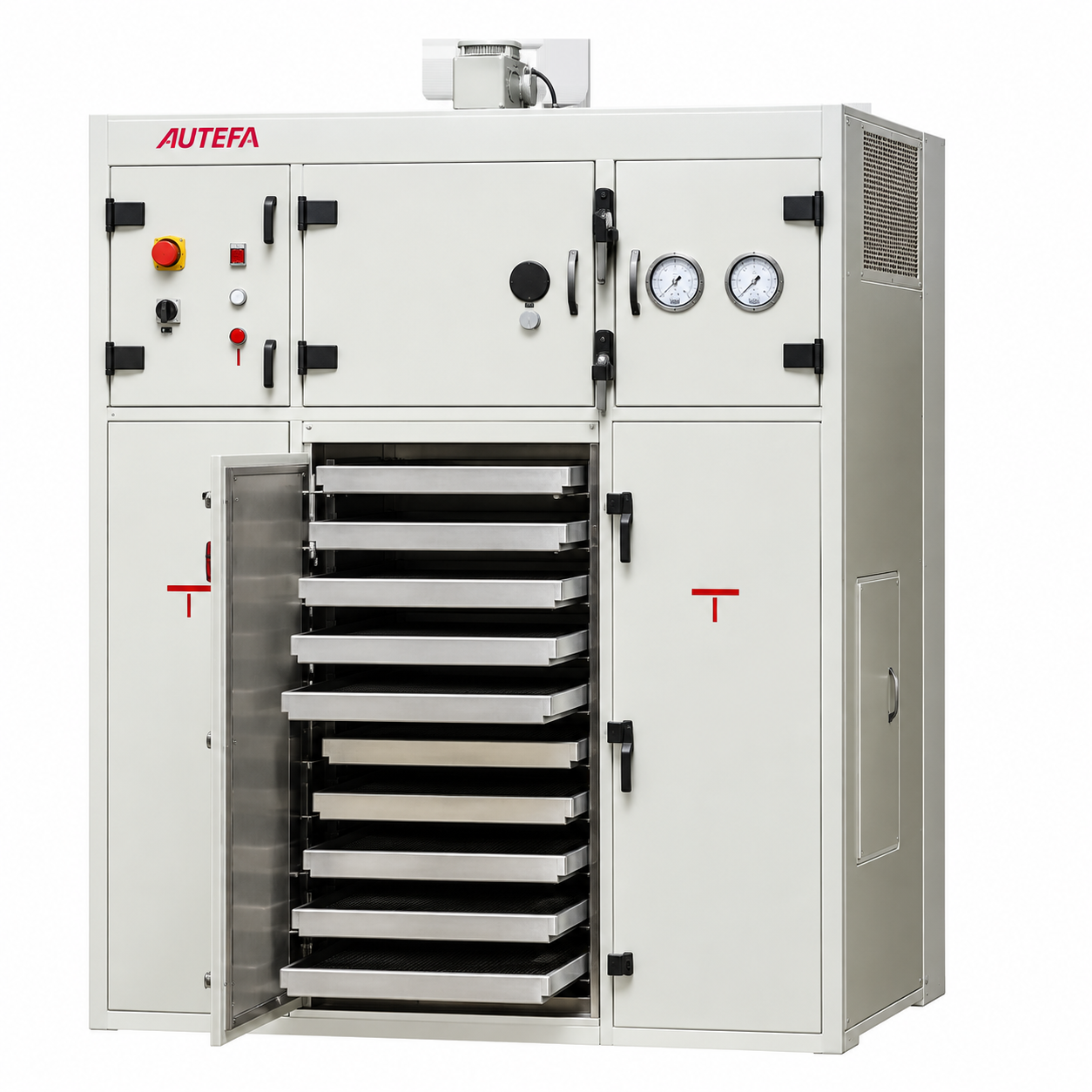
A properly designed seed drying tray system helps organize the material within the drying chamber and supports controlled exposure to the drying air. The tray arrangement, airflow pattern, drying capacity, and process controls should all be considered to achieve consistent moisture removal across the batch. Bry-Air’s tray dryers are designed for drying seeds, food products, spices, and other agro products where controlled low-temperature drying is important.
What Happens When Seeds Are Exposed to Improper Drying Conditions?
Improper drying conditions can create challenges related to both moisture removal and seed quality. If drying is incomplete, excess moisture may remain in the product and affect its suitability for storage. If conditions are too aggressive, particularly in the case of temperature-sensitive seeds, the drying process may negatively affect important quality characteristics.
Bry-Air explains that elevated drying temperatures can affect germination potential, which is why controlled low-temperature drying is important for seed applications. Its seed drying technology uses desiccant dehumidification to continuously provide dry air, creating conditions that support moisture removal while avoiding unnecessary dependence on high-temperature air.
The objective is therefore not simply to dry the seed as quickly as possible. Effective drying requires balancing moisture removal with the conditions necessary to protect the material being processed.
How Does a Tray Dryer Support Controlled Moisture Removal?
A tray dryer consists of a drying chamber containing trays on which the material is placed. In Bry-Air’s configuration, a desiccant dehumidifier continuously supplies dry air to the chamber. The system uses a designed air distribution pattern to optimize drying capacity and drying time.
The dry air absorbs moisture released from the product during the drying process. Maintaining appropriate air conditions can support consistent moisture movement from the seeds into the surrounding airflow. This makes humidity control an important part of the overall drying strategy.
A tray dryer can therefore be evaluated not only on its physical capacity but also on its ability to maintain suitable drying conditions. Bry-Air’s systems are based on desiccant dehumidification drying technology and are intended for applications where low-temperature, controlled drying is required.
How Does Desiccant Dehumidification Improve the Drying Process?
Desiccant dehumidification removes moisture from the air before it enters the drying chamber. This creates a lower humidity environment that supports the transfer of moisture from the product to the air. Instead of relying entirely on increasing air temperature, the drying process can use controlled dry air to encourage moisture removal.
Bry-Air’s tray dryer technology incorporates a desiccant dehumidifier that continuously feeds dry air into the drying chamber. The company states that its unique air distribution pattern is designed to optimize drying capacity and time.
For temperature-sensitive materials, this approach can be particularly relevant because product drying conditions can be controlled according to the requirements of the application. The correct configuration should still be based on factors such as the type of seed, initial moisture content, desired final moisture level, batch size, airflow requirement, and overall process conditions.
What Features Should Be Considered When Selecting a Seed Drying System?
Selecting drying equipment requires an assessment of both the product and the operating requirements. A system that is appropriate for one seed type or processing capacity may not necessarily be suitable for another application.
Bry-Air provides three standard FSD series models, identified as FSD-600, FSD-1200, and FSD-1800. These systems provide process airflow capacities of 600 CMH, 1,200 CMH, and 1,800 CMH respectively. Their stated drying capacities range from 180 kg to 540 kg per eight hours.
Evaluate Drying Capacity and Batch Requirements
The first consideration is the quantity of material that needs to be processed during each drying cycle. Batch size and required throughput directly influence the size and configuration of the equipment.
Bry-Air’s FSD series includes models with different numbers of trays and corresponding drying capacities. Selecting the right system requires comparing actual production requirements with available tray capacity and airflow performance rather than selecting equipment based only on the largest available model.
Facilities should also consider expected changes in processing requirements. If drying demand is expected to increase, future capacity requirements should be included in the equipment evaluation process.
Assess Airflow and Humidity Control
Uniform airflow is essential for consistent drying. If air distribution is not properly managed, some areas of the drying chamber may experience different conditions from others, potentially affecting the consistency of moisture removal.
Bry-Air highlights its designed air distribution pattern and independent airflow components as part of its tray dryer configuration. The equipment also includes options for humidity control through a humidistat, depending on application requirements.
Humidity monitoring and process control can help operators maintain more consistent drying conditions. The appropriate control strategy should be determined based on the specific material and required process outcome.
What Are the Operational Benefits of Bry-Air Tray Dryers?
Industrial drying equipment must provide reliable performance while remaining practical to operate and maintain. Bry-Air identifies several design and operational features within its tray dryer range, including a self-contained configuration, industrial-quality rotor construction, safety controls, compact installation features, and serviceability.
Reliability and Safety Features
Bry-Air’s tray dryers incorporate features such as a differential air pressure switch for proving reactivation airflow, a high-temperature safety thermostat cut-out, a reactivation cool-down safety device, and electrical interlocking for fan motors, heaters, and rotor drive. These features are intended to support controlled and safe operation.
The systems also use desiccant rotor technology with high-performance metal silicates. Bry-Air states that the rotor is non-flammable with organics below 2 percent and is designed for industrial durability and continued operation.
Installation and Maintenance Considerations
Equipment installation requirements can affect how easily a drying system can be integrated into an existing facility. Bry-Air describes its tray dryers as skid-based systems with castor wheels and a relatively compact footprint for their airflow capacity.
Maintenance requirements should also be considered during equipment selection. Bry-Air identifies quick service access and a water-washable rotor among the maintenance-related features of its tray dryer range. Regular inspection, appropriate operating practices, and adherence to manufacturer recommendations remain important for supporting reliable equipment performance.
How Can Controlled Drying Support Long-Term Seed Storage?
Drying and storage are closely connected. Removing moisture before storage can help create conditions that support longer-term seed preservation, but the storage environment must also be managed to prevent moisture regain.
Bry-Air notes that seeds dried before storage can regain moisture and suffer damage if they are not stored under controlled conditions. Its seed drying and storage solutions combine moisture control with environmental management to support seed preservation and help protect germination potential.
Why Should Drying and Storage Be Considered Together?
The benefits of controlled drying can be reduced if dried seeds are later exposed to unsuitable humidity or temperature conditions. For this reason, an effective seed preservation strategy should consider the entire process from initial moisture removal through to storage.
Storage temperature, relative humidity, and seed moisture content should be evaluated together. Bry-Air identifies these as key factors influencing seed shelf life and preservation. The appropriate storage conditions will depend on the seed type, intended storage duration, and application requirements.
Conclusion
Controlled seed drying is an important part of maintaining seed quality before storage, replanting, processing, or other applications. An effective system must remove moisture while carefully managing the conditions that influence product quality. Temperature, humidity, airflow, drying capacity, and process control all play important roles in achieving consistent results.
Bry-Air’s tray dryer technology uses desiccant dehumidification and controlled low-temperature dry air to support moisture removal from seeds and other temperature-sensitive products. With multiple capacity options and industrial safety, control, installation, and maintenance features, the equipment can be evaluated according to specific processing and throughput requirements.
The right drying solution should always be selected after evaluating the material, initial and target moisture levels, batch size, airflow requirements, storage objectives, and facility conditions. For technical guidance on selecting an appropriate drying system for your application, Contact Us to discuss your specific requirements.