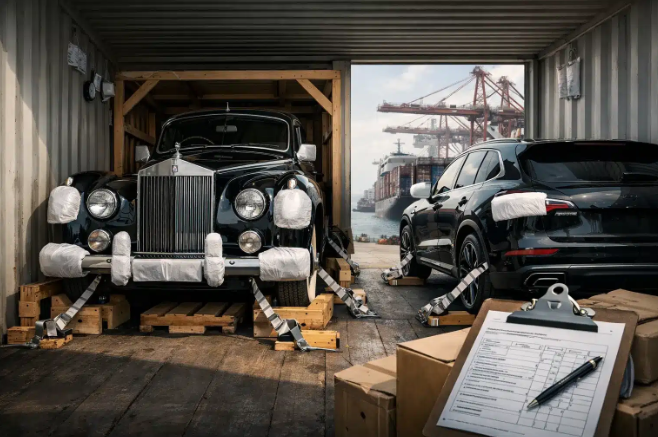
Enclosed or Open Transport: Choosing How Your Car Travels to Dubai
Most conversations about moving a car focus on when it will arrive and what it will cost. The question of how it travels often comes later, if at all. Yet the method chosen shapes the price, the protection and the kind of vehicle each option suits.
For anyone arranging car shipping from Europe to Dubai, understanding the main ways a vehicle can travel helps you make a deliberate choice rather than accepting whatever is offered first. The aim is to match the method to the car and the journey, not to assume one answer fits every situation.
Know what each method actually means
Vehicles generally travel either in a shared, more exposed arrangement or in a more protected, enclosed one. The difference is not only about walls around the car. It affects handling, cost, availability and how suitable the method is for a particular vehicle.
Ask the provider to describe exactly what a quoted method involves, including how the car is secured, whether it shares space with other vehicles, and what protection is included. A label on a quotation tells you less than a plain description of what will happen to the car.
Avoid assuming that the most protected option is automatically right, or that the cheapest is automatically a false economy. The sensible choice depends on the vehicle’s value, its condition and your own tolerance for risk.
Let the vehicle guide the decision
An everyday car in ordinary condition has different needs from a rare, valuable or highly modified vehicle. For a standard car, a shared arrangement may be perfectly reasonable. For something harder to replace, additional protection may be worth the cost.
Clearance matters too. A low or unusual vehicle can complicate loading regardless of the method, so describe the car accurately rather than relying on standard model dimensions. Mention body kits, lowered suspension, wide wheels or anything that affects how the car can be handled.
If the car does not run, steer or brake reliably, say so early. The method and equipment required for a non-running vehicle are not the same as for one that can be driven on and off under its own power.
Weigh cost against protection honestly
Price differences between methods are real, but so are the differences in protection. The useful exercise is to decide what a given level of protection is worth for your particular car, rather than treating cost as the only measure.
Ask what is included in each quotation and what sits outside it. A lower headline price may exclude handling or protection that you would want for a valuable vehicle. A higher price may include things you do not need for an ordinary car.
Put the options side by side on the same basis, including any agreed cover. Comparing a bare figure against a more complete one leads to decisions that look sensible on paper and disappointing in practice.
Think about the gap between the car’s value and the saving a cheaper method offers. For an ordinary vehicle, a modest saving may be entirely reasonable. For a car that would be difficult or costly to replace, the same saving can look far less appealing once weighed against what is at stake.
Ask about handling at both ends
How a car travels across the sea is only part of the story. Collection, loading, destination processing and final delivery all involve handling, and the care taken at these points matters as much as the method chosen for the main journey.
Confirm who loads and unloads the vehicle, how it is secured, and what happens if access at either end is difficult. For a prized car, the moments of loading and unloading are often where the most attention is needed.
Record the vehicle’s condition before it leaves and again on arrival, using consistent photographs and the collection report. A clear record protects both sides whatever method the car has travelled by.
Choose the method on purpose
There is no single correct way to move every car. A sensible owner decides based on the vehicle, the budget and the level of protection that feels right, rather than defaulting to the first option offered.
By understanding what each method involves, describing the car accurately and comparing quotations on the same terms, you can make a choice you are comfortable with. The car reaching Dubai in the condition you expect is worth a little thought about how it gets there.
GP 3 | October
Reading the Fine Print: Insurance and Risk When Shipping a Car to Dubai
Cover is the part of a shipment most people hope never to think about. It sits in the background of a quotation, assumed rather than examined, until something goes wrong and the exact wording suddenly matters a great deal.
When arranging car shipping from Europe to Dubai, the sensible time to understand protection is before the car is collected, not after an issue arises. The goal is not to expect the worst, but to know precisely what is and is not covered so there are no surprises if a question ever comes up.
Find out what the quotation actually covers
A shipment may include some form of cover, but the word itself tells you little. Ask what the protection applies to, what it excludes, and what the limits are. Two quotations described in similar terms can offer very different levels of protection underneath.
Clarify whether cover applies throughout the journey or only during certain stages. Collection, loading, the main movement, destination processing and final delivery are separate phases, and protection does not always extend evenly across all of them.
Ask for the terms in writing and read them before agreeing. A plain explanation from the provider, backed by the written document, is far more useful than an assumption about what is normally included.
Understand how the car’s value is treated
How a vehicle’s value is established matters as much as whether it is covered. Ask how value is determined, what evidence is required, and whether there is a limit that could fall short for a valuable or unusual car.
Provide accurate information about the vehicle, including any modifications or features that affect its worth. Describing a standard model when the car is a modified or rare example can create a gap between the assumed value and the real one.
Keep documentation that supports the vehicle’s value, such as the purchase invoice and condition records. Clear evidence gathered before the journey is far more useful than trying to assemble it after the fact.
If the car carries value that a standard figure would not capture, say so and ask how that is handled. A restored classic, a rare specification or recent significant work can all affect worth, and these are far easier to account for before the journey than to argue for afterwards.
Know where responsibility sits at each stage
A shipment involves several parties, and responsibility can pass between them as the car moves. Ask who is responsible at collection, during the main journey and at destination, and how an issue would be handled at each point.
Establish who to contact if something needs to be raised, and through what process. Knowing in advance whether a question goes to the freight provider, a destination representative or another party saves valuable time if it is ever needed.
Pay attention to the handover moments at both ends. Loading and unloading are often where handling risk is highest, so understanding who is responsible during these steps is particularly worthwhile.
Protect yourself with a clear record
The strongest support for any question about condition is a clear record made at the right time. Before the car is collected, photograph each side, the wheels, the glass and the interior in good light, and note the mileage and any existing damage.
Review the written collection report before agreeing to it, and keep your copy with the images somewhere you can reach after leaving Europe. Where a mark is difficult to photograph, describe it plainly alongside the pictures.
At delivery, use the same viewpoints to compare the vehicle. A consistent before-and-after record gives any discussion a factual starting point rather than relying on memory weeks after collection.
Store the record somewhere both reliable and reachable, such as a shared folder rather than a single phone. If a question ever arises, being able to produce clear, dated images quickly is worth far more than a vague recollection of how the car looked when it left.
Decide with your eyes open
Understanding protection is not about expecting a problem. It is about making an informed decision and knowing exactly where you stand if a question ever arises.
By reading the terms, confirming how value is treated, understanding where responsibility sits and keeping a clear record, you turn cover from a vague reassurance into something you actually understand. A car travelling to Dubai is a significant item, and knowing how it is protected is simply part of arranging the journey well.
GP 4 | October
Shipping a Classic or Enthusiast Car From Europe to Dubai
A cherished car is not just transport. It may be the result of a long search, years of careful ownership, or a restoration that represents real time and money. Moving it across the world asks more of both the owner and the arrangement than shipping an ordinary vehicle.
For enthusiasts planning car shipping from Europe to Dubai, a prized car deserves a shipment organised with the same care given to the car itself. The useful approach is to treat every detail as something to confirm rather than assume, because an unusual vehicle rarely fits a standard checklist neatly.
Describe the car as it really is
A classic or modified car can differ from its standard specification in ways that matter for handling. Lowered suspension, delicate bodywork, non-standard dimensions or a temperamental starting procedure are all things the people handling the car need to know.
Prepare an accurate description rather than relying on the model’s published figures. Explain modifications, note any fragility, and provide relevant manufacturer or restoration guidance where it exists. Specific, factual information is far more useful than a general request to take care.
If the car has particular quirks, such as a hidden bonnet release or a key sequence, write them down. The owner knows these by habit; the person collecting the car for the first time does not.
Ask how a valuable car will be handled
For a cherished vehicle, how it is handled often matters more than the headline cost. Ask how the car will be loaded, secured and protected, and whether the method suits a car that is harder to replace than most.
Pay particular attention to loading and unloading, which are where a low or delicate car is most exposed. Rather than assuming a familiar approach solves every issue, ask how collection will be carried out for the vehicle’s actual clearance and condition.
Discuss the level of protection appropriate for the car’s value. An enthusiast car may justify arrangements that would be unnecessary for an everyday vehicle, and that is a conversation worth having early.
Record the condition in detail
With a prized car, a thorough condition record is not a formality. Take a consistent set of photographs in good light, covering each side, the wheels, the glass and the interior, then add close-ups of any existing marks with a wider view to show their location.
Record the mileage and the condition of visible accessories, and review the written collection report carefully before agreeing to it. For a restored or original car, small details of condition can matter a great deal, so describe anything the photographs do not capture clearly.
Keep the records where you can reach them after leaving Europe, and use the same viewpoints to inspect the car on arrival. A detailed record protects a valuable vehicle far better than a handful of casual snapshots.
Confirm what travels with the car
Enthusiast cars often come with extras that matter, such as a second key, a tool kit, original documentation or spare parts. Decide which items travel with the vehicle and confirm that arrangement with the provider.
Create a brief inventory stating what is included and how approved items are secured, and record how many keys are handed over and to whom. Keep original documents separate unless a different, agreed transfer method is in place.
Remove valuables and personal belongings, and ask before leaving anything in the car. For a vehicle you care about, knowing exactly what is and is not travelling with it is part of peace of mind.
If spare parts or memorabilia are meant to travel with the car, raise them specifically rather than tucking them into the boot and hoping. Ask what is permitted, how such items should be declared, and whether they fall within any agreed cover, so nothing important is left to chance.
Give a prized car the journey it deserves
Shipping a classic or enthusiast car is not simply a larger version of moving an ordinary vehicle. The details matter more, the margin for careless handling is smaller, and the owner’s attachment to the car is real.
By describing the car accurately, asking how it will be handled, recording its condition in detail and confirming what travels with it, you give a cherished vehicle the considered shipment it warrants. When it finally reaches Dubai in the condition you remember, the care taken at every stage will have been worth it.